 Skip to content


A natural oil that works as well as minoxidil? Sounds implausible, doesn’t it? Yet research shows that after 6 months of daily use, rosemary oil matches 2% minoxidil for stimulating regrowth. And there’s a welcome bonus: far less scalp irritation.
Before you rush out to buy every essential oil in sight, though, here’s the reality check. Of the 12 most hyped oils online, only 5 have actually been tested on humans under proper scientific conditions. The rest? Mouse studies, lab experiments, or simply folklore handed down through generations without any verification.
Then there’s castor oil, the internet’s absolute favourite. The truth is, there are no clinical studies proving it regrows hair. The mechanisms people attribute to it come from computer modelling, not real-world observation. Disappointing, I know.
So we’ve done the legwork and trawled through the medical databases. Here’s what the science actually tells us.
Oils with Genuine Evidence Behind Them
Rosemary Oil: The Clear Winner
This has been the genuine surprise in trichology circles over recent years. A study involving 100 men with androgenetic alopecia found rosemary oil performed on par with 2% minoxidil after six months. Both groups saw the same increase in hair count and density improvement.

The mechanism? Rosemary contains a compound called 12-methoxycarnosic acid that blocks testosterone from converting into DHT, the hormone responsible for shrinking follicles until they stop producing hair altogether. Its blocking efficiency sits between 82% and 94%, which is comparable to finasteride, the standard pharmaceutical treatment.
There’s also a practical advantage: patients using rosemary reported noticeably less itching than the minoxidil group. When you’re applying something daily for months on end, comfort matters.
Pumpkin Seed Oil: An Unexpected Oral Option
This one caught researchers off guard. Taken as capsules (400 mg daily), it produced a 40% increase in hair count after 24 weeks. The placebo group managed just 10%. That’s a meaningful difference.

The phytosterols in pumpkin seed oil, particularly beta-sitosterol, work as natural 5-alpha reductase inhibitors. They’re targeting the same enzyme as finasteride, just using plant-based molecules.
There’s also a topical version showing results comparable to 5% minoxidil in women.
The catch? You need to take it as a supplement, not simply massage it in. And expect to wait at least 6 months before seeing changes.
Peppermint Oil: Promising, But We’re Waiting
The results on paper look impressive. In mice, peppermint oil outperformed 3% minoxidil, with 92% hair regrowth versus 55% after just 4 weeks. The menthol causes vasodilation, increasing blood flow to follicles.

Here’s the issue: all of this comes from rodent studies. No human clinical trials have confirmed these findings yet. The mechanism makes theoretical sense, but we need proper evidence before making recommendations.
Aromatherapy Blend: Proven for Alopecia Areata
This isn’t a single oil but a specific combination: thyme, rosemary, lavender, and cedarwood, diluted in jojoba and grapeseed oil.
After 7 months of daily scalp massage, 44% of patients with alopecia areata showed significant improvement. Only 15% improved with neutral oil massage alone.
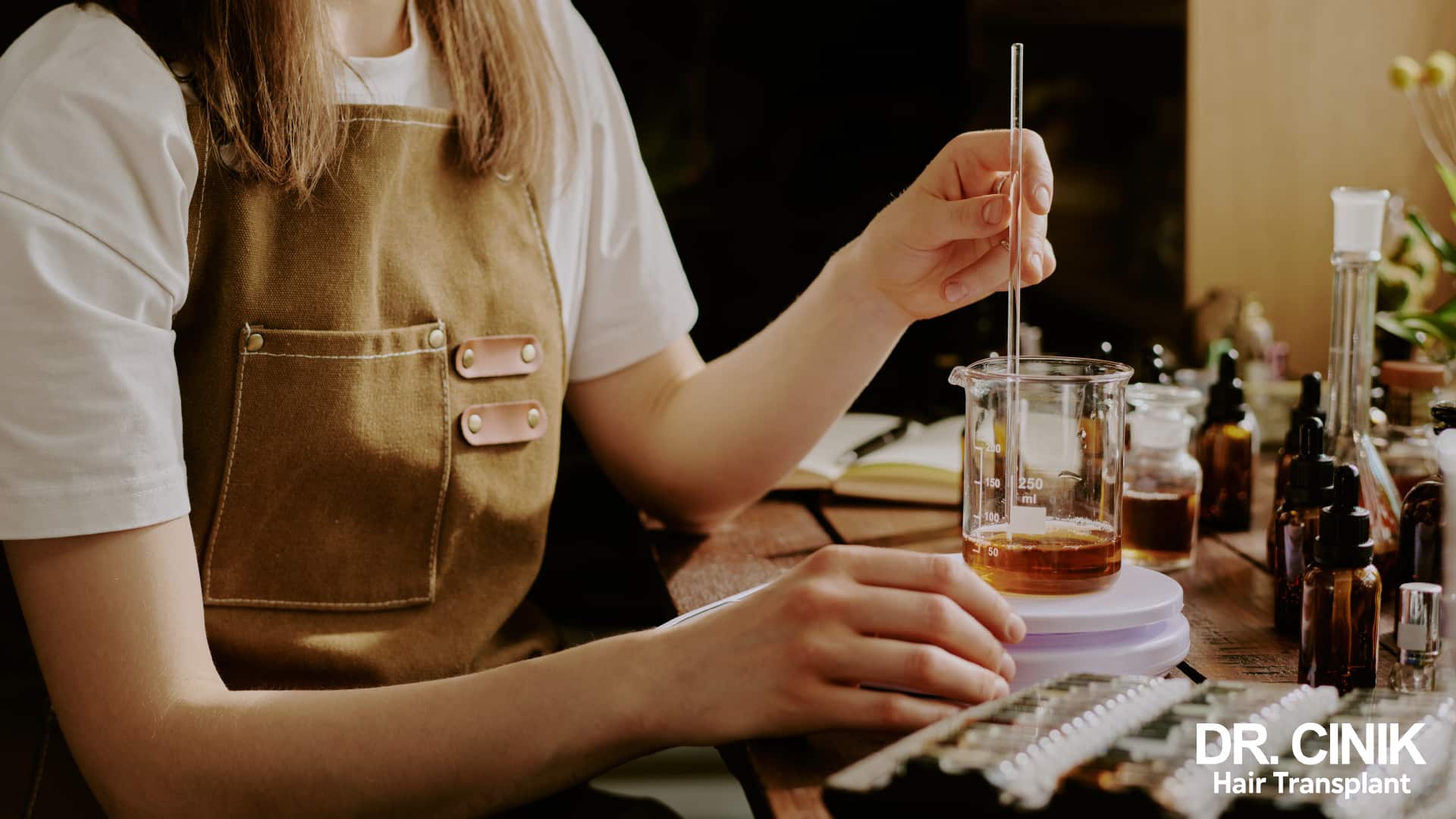
This protocol actually features in British dermatology guidelines. The massage component appears to work synergistically with the oils. The mechanical stimulation of the scalp contributes to the overall effect.
Oils with Partial or Indirect Benefits
Coconut Oil: Protection, Not Regrowth
Coconut oil won’t make hair grow back. That’s simply not what it does.
What sets it apart is that it’s the only oil that actually penetrates the hair shaft. Sunflower and mineral oils? They sit on the surface and that’s it.

This penetration significantly reduces protein loss in both healthy and damaged hair. For hair weakened by colouring, heat styling, or general wear, it’s genuinely protective.
A healthy scalp creates better conditions for whatever growth is possible.
Lavender Oil: Anti-inflammatory Properties
Mouse studies show 90-95% regrowth with a well-documented anti-inflammatory effect. It works particularly well as part of the aromatherapy blend mentioned earlier.

The calming scent is a side benefit for evening scalp massages. Given that stress contributes to hair loss, anything promoting relaxation has some value.
Tea Tree Oil: Scalp Cleanser
It doesn’t directly stimulate growth, but it’s excellent at maintaining scalp health.
A shampoo containing 5% tea tree oil reduces dandruff by 41% in just 4 weeks. Its antifungal properties eliminate microorganisms that cause chronic scalp inflammation.

Healthy follicles need a healthy environment to function properly.
Popular Oils That Lack Evidence
Castor Oil: Overhyped and Underproven
You’ve probably seen this oil everywhere. Social media testimonials, beauty tutorials calling it miraculous. You’d think it was the answer to everything.
The clinical evidence? Non-existent.

The supposed mechanism (prostaglandin D2 inhibition) exists only in computer models. Nobody has demonstrated it works on actual human scalps.
It might be useful for coating and conditioning hair, but the regrowth claims simply aren’t supported by research.
Black Seed Oil: Potential, But Unproven
It contains thymoquinone, which has established anti-inflammatory and antifungal properties. Wound healing studies suggest it improves folliculogenesis.

But there are no clinical trials specifically examining hair growth. Worth keeping an eye on, but not something to recommend with confidence yet.
Argan Oil: Good for Hair, Not for Growth
It offers excellent antioxidant protection and stimulates dermal papilla cells in laboratory settings. Sounds promising.
However, systematic reviews are unambiguous: no significant evidence for direct hair growth.
It remains a quality treatment for shine and protecting hair lengths. Just don’t expect it to address hair loss.
Understanding the Limitations
What Oils Can and Cannot Achieve
Even the most effective oils, rosemary and pumpkin seed, have their limits. They can slow down hair loss, stimulate follicles that are still active, and improve the condition of existing hair.

Once a follicle has permanently miniaturised or disappeared, no oil will bring it back. At advanced stages on the Norwood scale, oils simply aren’t enough. They work as prevention and support, not reconstruction.
The Consistency Challenge
Studies showing positive outcomes share one thing: at least 6 months of daily application. Not three weeks. Not ‘when I get round to it.’ Every single day, for months.
How many people actually manage that? This is the real obstacle. Any treatment only works if you stick to it.
Hair Transplantation: The Only Permanent Solution for Baldness
When Oils Have Done All They Can
Oils can support, prevent, and slow progression. But for established androgenetic alopecia, there’s only one genuinely effective permanent solution: a hair transplant in Turkey.
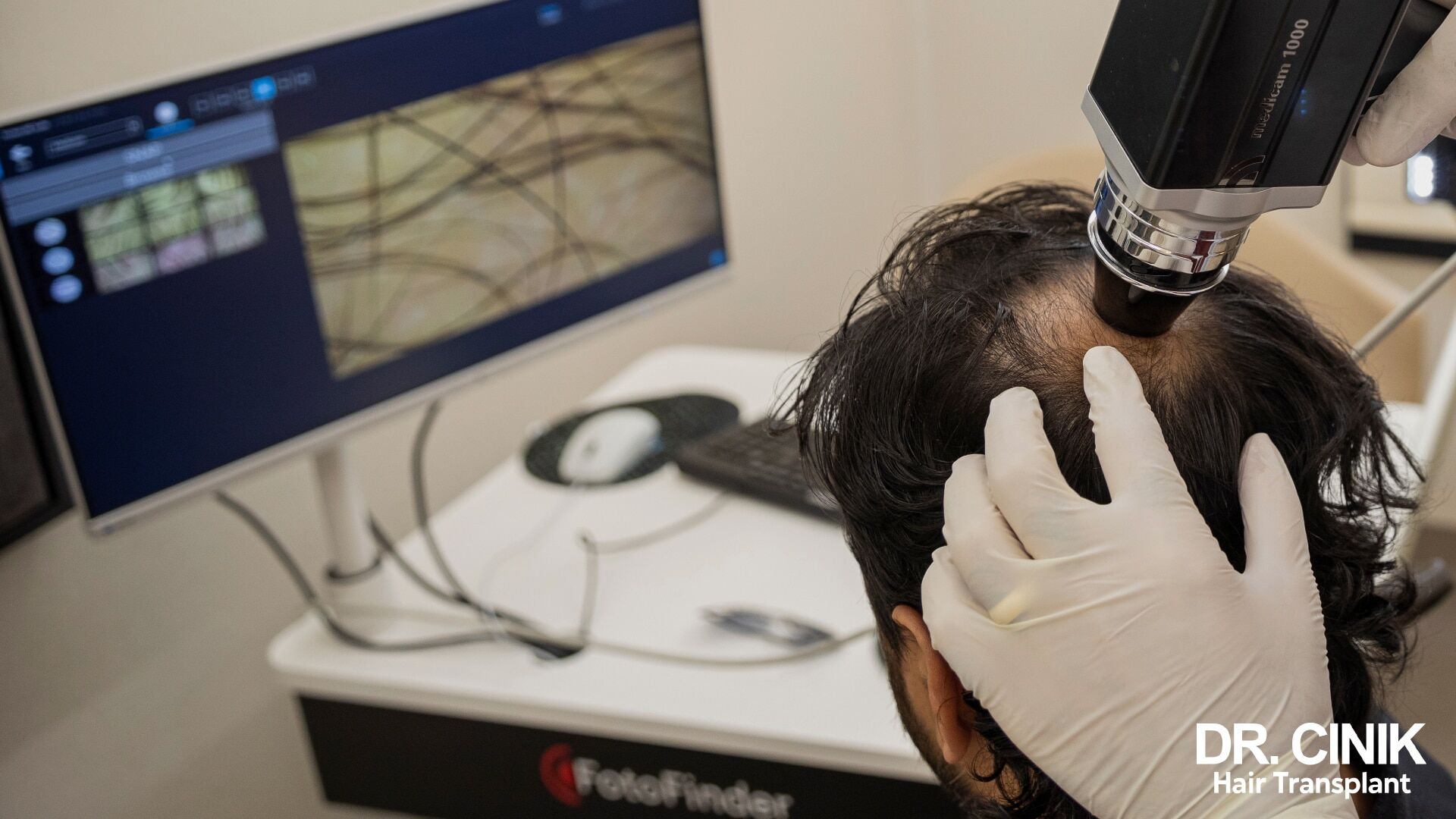
The reason is straightforward. Follicles taken from the donor area at the back of the head are genetically resistant to DHT. Once transplanted, they keep that resistance. They grow, regenerate, and continue doing so. Permanently.
No oil, serum, or supplement can replicate this. Resistant follicles are relocated to balding areas, and they remain resistant.
Modern Techniques Have Transformed Results
Hair transplantation has advanced considerably.
Sapphire FUE uses sapphire blades for more precise incisions, quicker healing, and better density.

DHI (Direct Hair Implantation) places grafts individually using a Choi pen, without pre-made channels.
The outcomes are natural-looking, permanent, and critically, they don’t require daily applications for years. One procedure, proper aftercare, and you’re done.
Dr Cinik’s Approach: Combining Methods
With over 20 years in hair restoration, Dr Emrah Cinik doesn’t view natural treatments as competing with surgery.
Quite the opposite: PRP (Platelet-Rich Plasma), included in all transplant packages, supports healing and stimulates remaining native follicles.

For early-stage hair loss, treatments like mesotherapy, laser therapy, and Regenera Activa may be sufficient on their own or serve as preparation for future procedures.
And evidence-based oils like rosemary can certainly form part of a broader approach.
A free consultation allows us to assess your individual situation. Is it early hair loss that can still be managed? Or established baldness requiring transplantation? The answer varies for each person, which is precisely why personalised assessment matters.
Scientific References
Cho, YH, Lee, SY, Jeong, DW, Choi, EJ, Kim, YJ, Lee, JG, Yi, YH, & Cha, HS (2014). Effect of pumpkin seed oil on hair growth in men with androgenetic alopecia: a randomized, double-blind, placebo-controlled trial. Evidence-Based Complementary and Alternative Medicine, 2014, 549721. https://pubmed.ncbi.nlm.nih.gov/24864154/
Gode, V., Bhalla, N., Shirhatti, V., Mhaskar, S., & Kamath, Y. (2012). Quantitative measurement of the penetration of coconut oil into human hair using radiolabeled coconut oil. Journal of Cosmetic Science, 63(1), 27-31. https://pubmed.ncbi.nlm.nih.gov/22487449/
Hay, I. C., Jamieson, M., & Ormerod, A. D. (1998). Randomized trial of aromatherapy: successful treatment for alopecia areata. Archives of Dermatology, 134(11), 1349-1352. https://pubmed.ncbi.nlm.nih.gov/9828867/
Murata, K., Noguchi, K., Kondo, M., Onishi, M., Watanabe, N., Okamura, K., & Matsuda, H. (2013). Promotion of hair growth by Rosmarinus officinalis leaf extract. Phytotherapy Research, 27(2), 212-217. https://pubmed.ncbi.nlm.nih.gov/22517595/
Oh, J.Y., Park, M.A., & Kim, Y.C. (2014). Peppermint oil promotes hair growth without toxic signs. Toxicological Research, 30(4), 297-304. https://pubmed.ncbi.nlm.nih.gov/25584150/
Panahi, Y., Taghizadeh, M., Marzony, ET, & Sahebkar, A. (2015). Rosemary oil vs minoxidil 2% for the treatment of androgenetic alopecia: a randomized comparative trial. SKINmed, 13(1), 15-21. https://pubmed.ncbi.nlm.nih.gov/25842469/
Rele, A.S., & Mohile, R.B. (2003). Effect of mineral oil, sunflower oil, and coconut oil on prevention of hair damage. Journal of Cosmetic Science, 54(2), 175-192. https://pubmed.ncbi.nlm.nih.gov/12715094/
Satchell, A.C., Saurajen, A., Bell, C., & Barnetson, R.S. (2002). Treatment of dandruff with 5% tea tree oil shampoo. Journal of the American Academy of Dermatology, 47(6), 852-855. https://pubmed.ncbi.nlm.nih.gov/12451368/